ESPR Insights 1
How do we as designers deal with it?
The European Green Deal sets ambitious sustainability targets for the industry. However, for designers, many of these are not new. Considerations regarding efficient resource usage, product life cycles, circularity, social responsibility, and environmental impact have been central to the design discourse for decades. At the turn of the millennium, some focus was lost, but sustainability has firmly returned to the center of our profession.
We are a small professional group — but we operate at a decisive point: the very beginning of the product development process. At that stage, fundamental decisions are made regarding materials, production processes, durability, end-of-life scenarios, etc. In other words, us designers carry significant responsibilities.
From the very beginnings of our profession, it soon became clear that design is not limited to styling and decoration, to questions of formal aesthetics, but very much about scenario building, and strategy, to questions of impact. These differentiations have already been widely discussed; what is needed now is not yet more theory, but consistent implementation in daily practice and industry.
As many have pointed out before, design requires a much stronger ethical position. Designers should be prepared to say no – to decline working on projects where negative social or environmental side effects are obvious. Design education has already responded. Many institutions have significantly strengthened sustainability matters across their curricula, integrating approaches to circular economy, systemic thinking, and ethical reflection as core competencies.
Yet an uncomfortable question remains: Who designs for Temu, Alibaba, thrift store chains, or the defense industry? Design does not happen in isolation. It is embedded in economic and political systems, and mere acknowledgement that systemic pressures exist does not remove designers’ responsibilities. The European Green Deal does not fundamentally change our role — it reinforces the urgency to act, according to the principles designers have recognized decades ago.
Another inconvenient truth is that, over time, due to the ubiquitous use of digital tools like CAD, 3D printing, AI, etc., the quality of design has worsened, not improved. Probably, instead of thinking, drawing, experimenting with form, and reflecting, designers mistake clicking and prompting for a proper design process. On top, particularly with the use of AI, vast amounts of energy are squandered, and intellectual property rights are thrown in the bin. This is a severe problem for design education, design practice, etc.
Here, one could also propose another European deal or a design law, or even appoint an “EU Chief Design Commissioner”, like the first Chief Design Officer of the United States, as absurd as it may sound.
Conclusion: Stay stubborn.
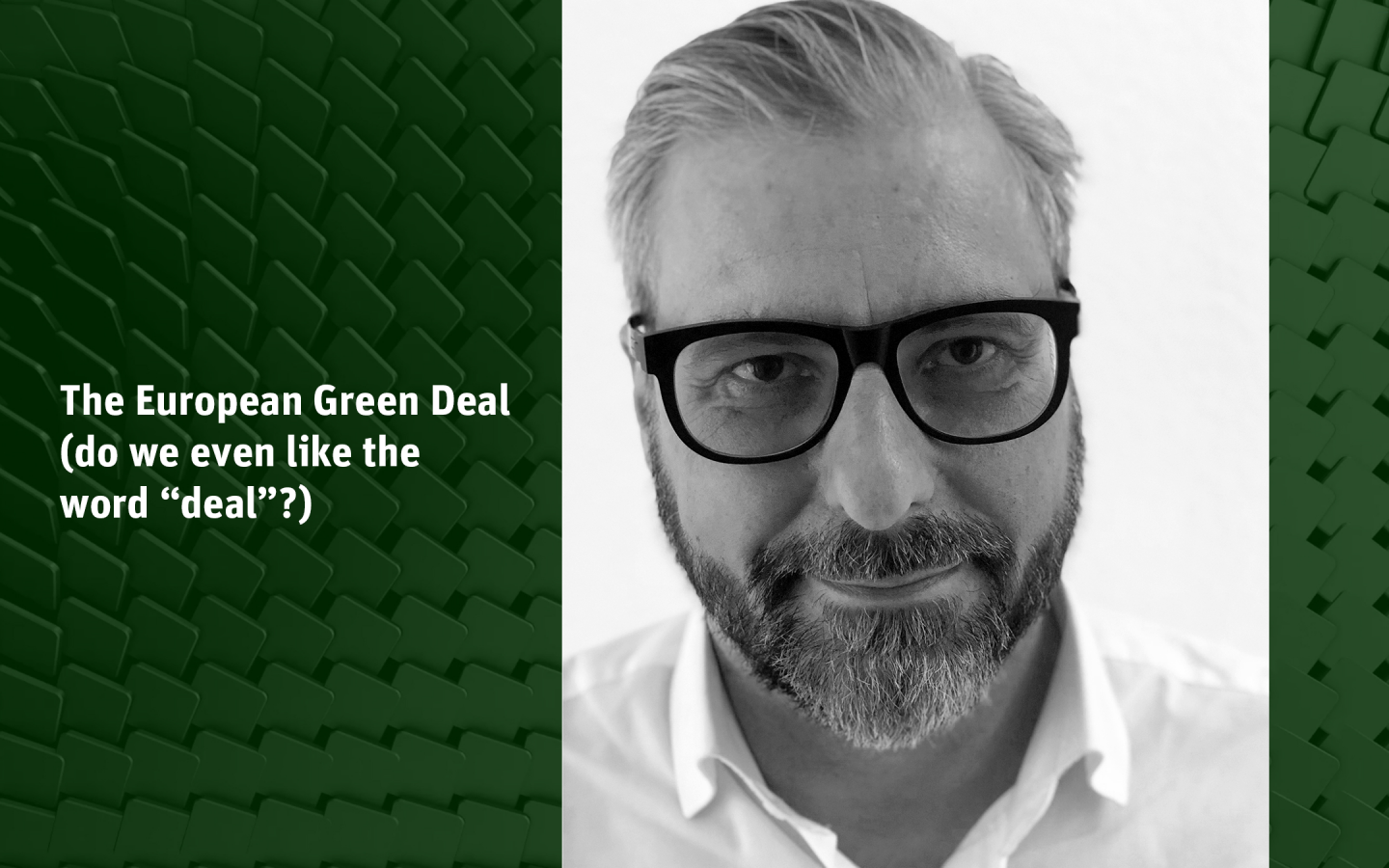
Written by Prof. Claus-Christian Eckhardt
>> See further insights on design and upcoming regulations at Normina